








A UK property buyers’ expert has revealed five home improvements that could help UK homeowners cut their energy bills, and the best part is that they can be installed for free through existing support schemes.
“Millions of homes across the UK qualify for fully funded improvements that can boost efficiency and cut costs, but most owners aren’t aware they’re eligible,” says Saif Derzi, founder of Property Buyers Today.
“The Energy Company Obligation and other programmes specifically target properties with poor energy ratings to help reduce fuel poverty and carbon emissions.”
Improving home energy efficiency has become increasingly important as energy prices remain high following the surge in 2022.
The expert explains that each funded installation could help households save hundreds of pounds a year on their energy bills.
Cavity wall insulation
Homes with uninsulated cavity walls lose heat quickly, which means money is wasted every time the heating is on.
Many properties built between 1930 and 1990 have cavity walls that can be easily filled with insulation to improve efficiency.
According to the expert, adding cavity wall insulation can save a typical semi-detached household around £300 a year on energy bills. The process is now simple and usually takes just a few hours to complete.
Loft insulation
Loft insulation is another free upgrade available to many UK homeowners. “According to the UK Parliament, about 7.9 million homes across Britain have inadequate loft insulation, letting valuable heat escape through the roof,” Derzi says. “Installing insulation to a depth of at least 270mm creates a strong thermal barrier that can significantly reduce heating costs.”
The process involves laying mineral wool or similar materials across loft spaces to trap heat that would otherwise rise and escape. Homes with proper insulation often feel warmer and more comfortable almost immediately.
Boiler replacements
Boiler replacements are among the most valuable free upgrades available, as older, inefficient models waste large amounts of gas or oil and often struggle to keep homes warm.
Modern condensing boilers operate at 90% efficiency or higher, compared to older models that might run at just 60%. This improvement can lead to significant reductions in energy bills.
“This upgrade alone can reduce heating costs by 30% or more,” reveals the expert. “Qualifying households can receive completely new heating systems under schemes like ECO4.”
Solar panel installation
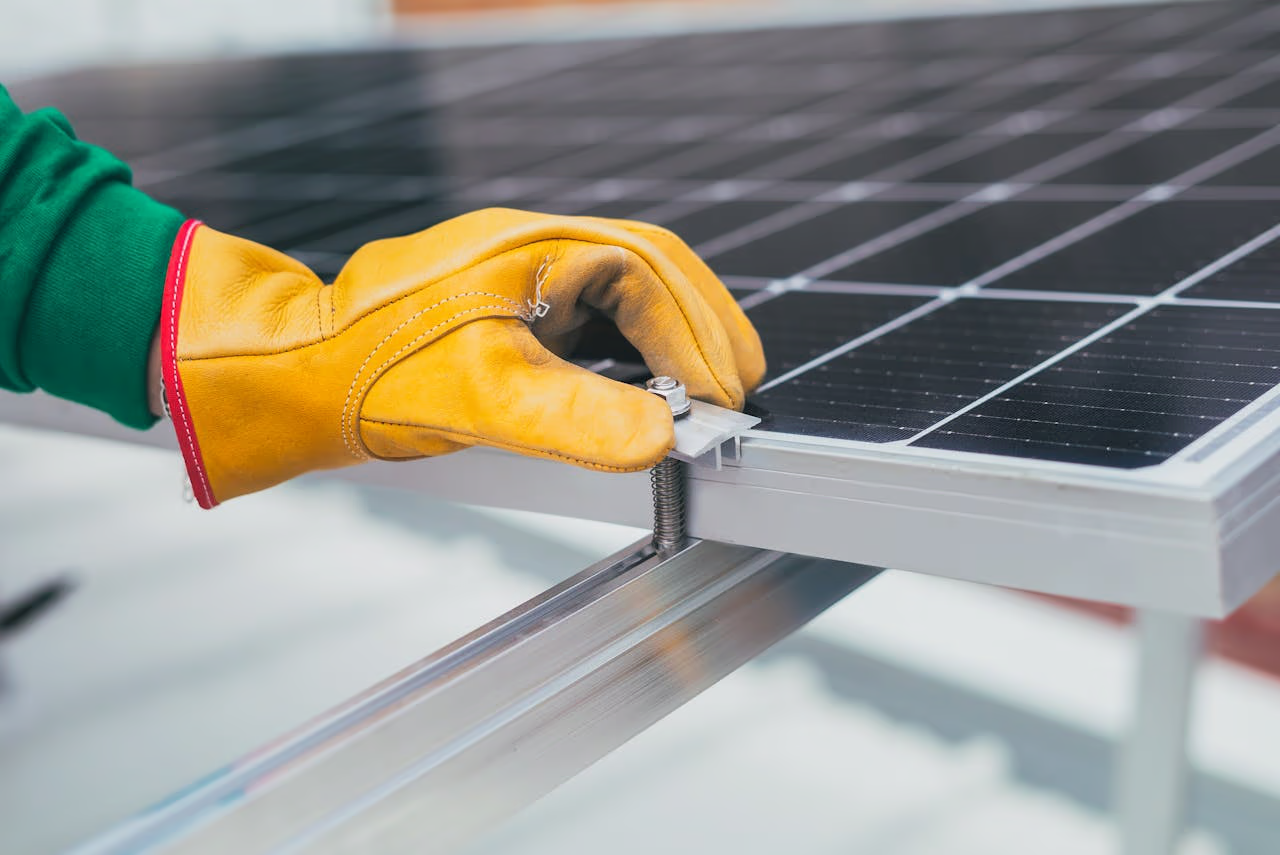
Solar panel installation is another valuable upgrade now available through government schemes for qualifying households.
“Free solar panel systems allow homes to generate their own electricity, reducing reliance on grid power and lowering energy costs. This technology was not previously included in government schemes but now offers one of the most rewarding upgrades available,” Derzi explains.
A typical 4kW solar system can provide around a third of a household’s electricity needs, with the greatest savings seen during the summer months. Homes with south-facing roofs benefit the most, although east and west-facing properties can also produce substantial amounts of power.
External wall insulation
Homes built before 1930 often have solid walls that lose twice as much heat as cavity walls. External insulation acts like a thermal blanket, improving the property’s energy efficiency while also giving it a refreshed appearance.
This upgrade is especially suitable for older homes, offering both energy savings and aesthetic improvements. The finish can mimic traditional rendering or brick, helping to maintain the character of period properties.
Who qualifies for these free upgrades?
Eligibility for fully funded upgrades usually depends on factors such as household income, benefits status, and the energy efficiency rating of the property.
“The main qualifying factors include receiving benefits such as Universal Credit or Pension Credit, having a household income below certain thresholds, or living in a home with a low energy efficiency rating,” Derzi explains.
“Councils set their own criteria, often including factors like age, health conditions, or location in deprived areas. Properties must typically have Energy Performance Certificate ratings of D to G to qualify, which accounts for nearly half of UK housing stock.”
The Department for Energy Security and Net Zero manages several Help to Heat schemes delivering these improvements, while The Energy Company Obligation (ECO4) Programme represents the largest source of funding, running until March 2026.
Local Authority Flexible Eligibility can extend these schemes to households that might otherwise miss out, even if they don’t claim benefits, and The Great British Insulation Scheme extends eligibility to households in council tax bands A to D in England, and A to E in Scotland and Wales, providing they have suitable property types.
How to apply
The application process begins with an eligibility assessment, which can be conducted quickly over the phone. Property owners can apply through their energy supplier, local council, or specialist eligibility checkers who navigate the various schemes on their behalf.
After qualification, a qualified surveyor visits the property to determine which measures would be most beneficial and technically feasible. Following the survey, installations are scheduled with approved contractors. The entire process typically takes between 4-12 weeks from initial contact to completed installation.
Derzi advises that homeowners should act promptly to secure these improvements. “Funding allocations change periodically, and schemes do eventually close. Homeowners with poorly insulated properties should check their eligibility now to avoid missing out on these opportunities.”
“What makes these schemes especially valuable is that eligible households receive completely free installations with no catch and no repayments required. Installing multiple energy efficiency measures can turn a cold, expensive-to-heat home into a comfortable and more affordable property,” the expert explains.
“By taking advantage of these fully funded upgrades, homeowners can reduce energy bills, make their homes more comfortable, and contribute to a greener future,” says Derzi.
Help keep news FREE for our readers
Supporting your local community newspaper/online news outlet is crucial now more than ever. If you believe in independent journalism, then consider making a valuable contribution by making a one-time or monthly donation. We operate in rural areas where providing unbiased news can be challenging. Read More About Supporting The South Wales Chronicle