







Public in Wales urged to adopt as large-scale incidents rise 60%
The RSPCA needs more people in Wales to consider adopting a pet from one of its animal centres – as new figures reveal that the number of incidents across Wales involving 10 or more animals has increased more than 60% since 2022.
Last year the charity responded to 4,200 incidents which involved at least 10 animals at the same address across England and Wales – including 344 in Wales, up from 214 in 2022 (61% increase).
The charity is now urging people considering adding a pet to their family to look at adopting to help free-up space in their overwhelmed centres.
RSPCA Superintendent Jo Hirst said: “We are struggling with rising reports of cruelty and neglect and over recent years more and more of those reports will involve, 10, 20, even 100 animals. And because they’ve been living in large groups, they may need more support until they are ready to find a new home.”
She added: “We currently have more animals in our care than space in our centres. These large animal rescues are adding to already overwhelmed animal centres and local charities.
“We really need help from animal lovers. If you are considering adding a pet to your home, please consider rescuing. We need extra special homes for some of our animals.”
Last year alone, across England and Wales the RSPCA responded to 1,752 mass cat incidents – almost five every single day, and 1,119 mass dog reports last year – that’s three every single day.
There were 75 large-scale incidents involving 100 or more animals being rescued from the same property last year alone – 13 of those included cats, and three included dogs. Many were multi-agency operations involving other charities and public bodies.
Cases of large numbers of animals being kept at one address can be linked to mental health struggles, the cost of living crisis, or breeders operating with poor practices. And RSPCA experts say that initially well-meaning individuals often see situations spiral out of control.
Recent multi-animal incidents that the RSPCA has been involved in include hundreds of animals – including dogs, horses, birds and cats – rescued from squalid conditions on a farm; a large number of pedigree cats rescued in poor health from one property; while last month 20 guinea pigs were signed over from a property in South England by someone struggling to cope.
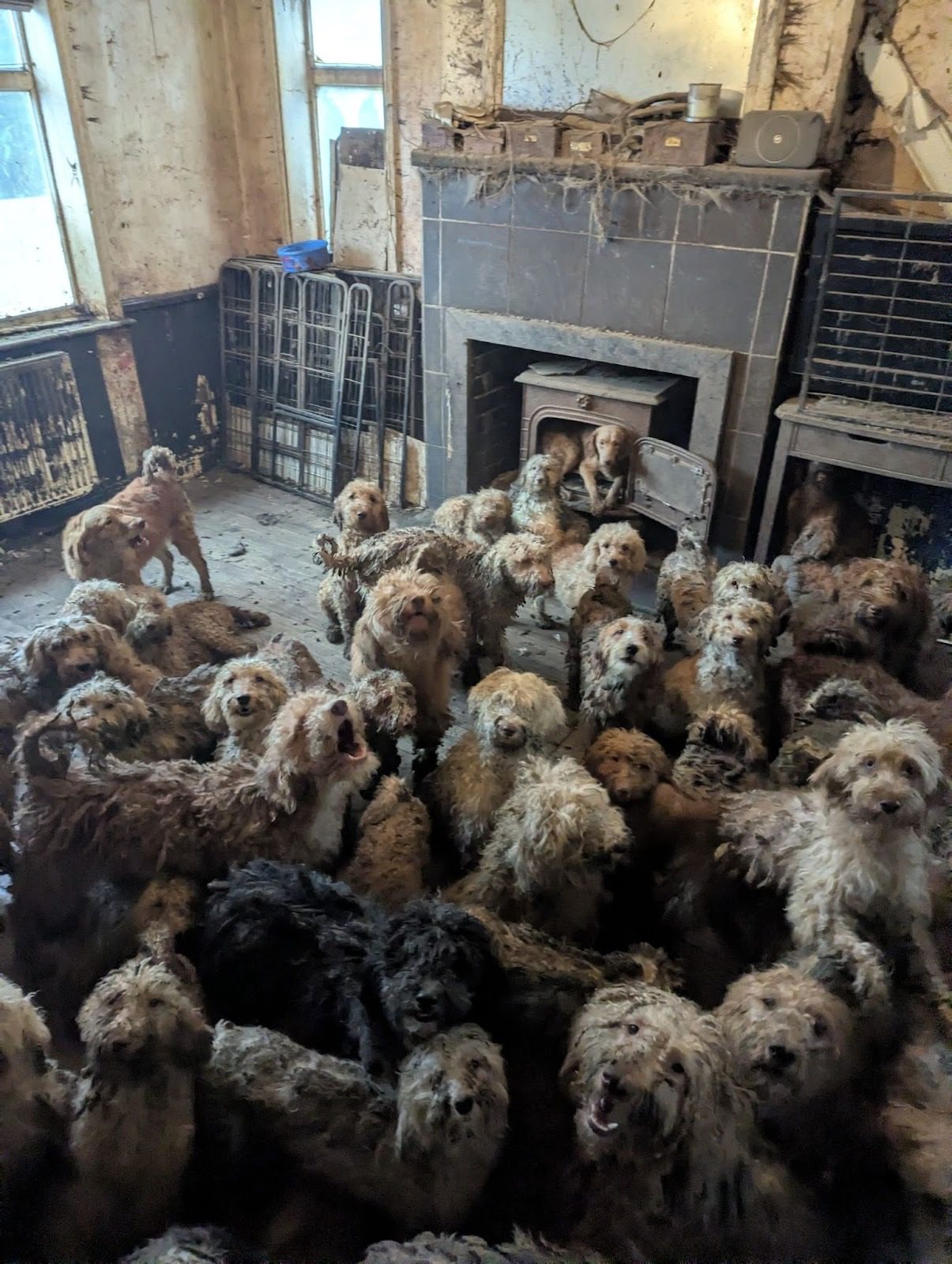
Another recent example involved an incident where more than 250 poodle-cross dogs, all from the same property, (pictured above) were signed over to the Dogs Trust Charity. The numbers and living conditions of the dogs had rapidly grown out of control due to extenuating family circumstances*. The RSPCA took in 87 dogs, and the rest went to the Dogs Trust. Following the release of the image the RSPCA has also confirmed that this image is not AI.
Across Wales, there were 214 cases in 2022 which has risen to 344 in 2025 – a 61 per cent increase. Last year in 2025 – the most incidents (involving more than 10 animals) were in Rhondda Cynon Taf (32), Carmarthenshire (29), Swansea (26), Neath Port Talbot (23) Cardiff (23) and Wrexham (22). Wrexham has had the biggest increase from 2024 to 2025 from seven to 22 incidents reported.
In Wales there have been multi-animal cases involving a wide range of animals from horses and donkeys, several incidents involving large numbers of cats – one where a large number were kept in an unsuitable environment in cages – and a number of dog incidents. In one incident in recent years almost 50 dogs were rescued from one property, many with dirty coats, fleas and suffering from skin disease.
Among the animals from large scale incidents in Wales that are now looking for new homes include:
Reid at RSPCA Newport Animal Centre, whose fun-loving personality shines through more each day. She would benefit from a quiet area of her new home, where she can adjust at her own pace, alongside patient adopters who understand she may take time to relax. Once she feels safe she becomes a bundle of joy.
Cookie, also at Newport, was nervous and shy after coming from a multi-animal home, but has blossomed in RSPCA care and enjoys a fuss and attention. She could live with older children.
Lovely Luna at Newport, who would also benefit from a calm home with no children, to allow her time to settle. She is super affectionate to her carers once she feels comfortable. She would prefer a home where the owners are around a lot of the time.
Jo said: “Rescues involving lots of animals are often very complex – and sometimes can include very difficult family circumstances, mental health problems, or be linked to irresponsible pet breeding.
“People accumulate animals for a multitude of reasons, but the welfare risks for these poor animals are always the same.
“We’ve already had two incidents involving hundreds of pets this year. Those sorts of rescues put strain on our services, and are extremely harmful to the animals involved. It is vital we work with external partners when dealing with these types of incidents – to ensure support is in place where appropriate.
“Often, animals rescued from crowded environments are undersocialised and require a long period of rehab before being rehomable, which puts even more strain on an already stretched rescue centre.
“We are encouraging people to contact an animal rescue organisation if they are at a stage where they, or someone they know, is struggling with the numbers of animals they have in their household. Often, problems escalate because people don’t reach out early enough.”
Hoarding incidents are just one of the ways in which these situations occur – some multi-animal incidents involve breeders who have too many puppies or kittens and become overwhelmed. In many incidents the best route is to offer advice and support to ensure the safety of animals, and protect other animals in the future.
Jo added: “Serious mental health issues and complex situations involving animal hoarding are in part driving these figures. It’s vital that people are able to contact us – or another animal charity – where they have too many pets and are unable to cope.
“These situations put massive pressure on our national centres – who have limited space for housing animals. That’s why we are asking people with space in their home for a pet to consider adopting – it frees up space so we can rescue more animals in need. We’re so grateful for anyone choosing to donate to our Spring Appeal.“
Visit rspca.org.uk/findapet now if you are able to help by adopting a pet.
Help keep news FREE for our readers
Supporting your local community newspaper/online news outlet is crucial now more than ever. If you believe in independent journalism, then consider making a valuable contribution by making a one-time or monthly donation. We operate in rural areas where providing unbiased news can be challenging. Read More About Supporting The South Wales Chronicle