









Monday 24th March 2025 – Cardiff has topped a nationwide poll to discover which UK city has most office days, five years on from the boom in hybrid working following the coronavirus lockdown.
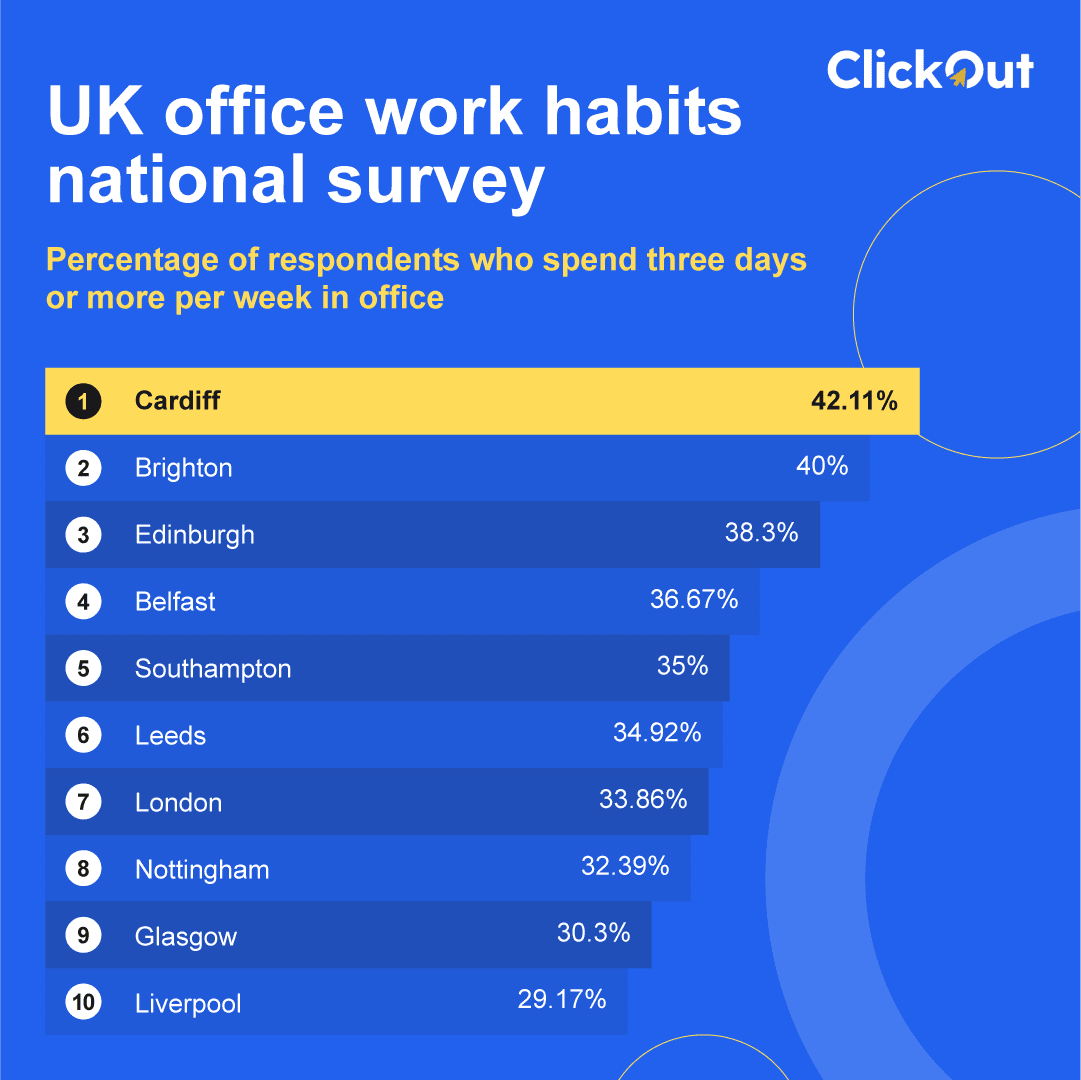
In a survey of more than 2,000 office workers conducted by Censuswide on behalf of iGaming marketing firm ClickOut Media in March 2025, the Welsh capital came in first place with 42.11% of the Cardiff workforce spending three or more days per week in the office.
Despite a major push for London workers to return to the office, only 33.86% of respondents say they spend the majority of their week at their desk.
In second place was Brighton (40%), ahead of Edinburgh (38.3%), Belfast (36.67%) and Southampton (35%).
Rounding out the top 10 of UK cities with the highest proportion of office days was Leeds (34.92%), London (33.86%), Nottingham (32.39%), Glasgow (30.3%) and Liverpool (29.17%).
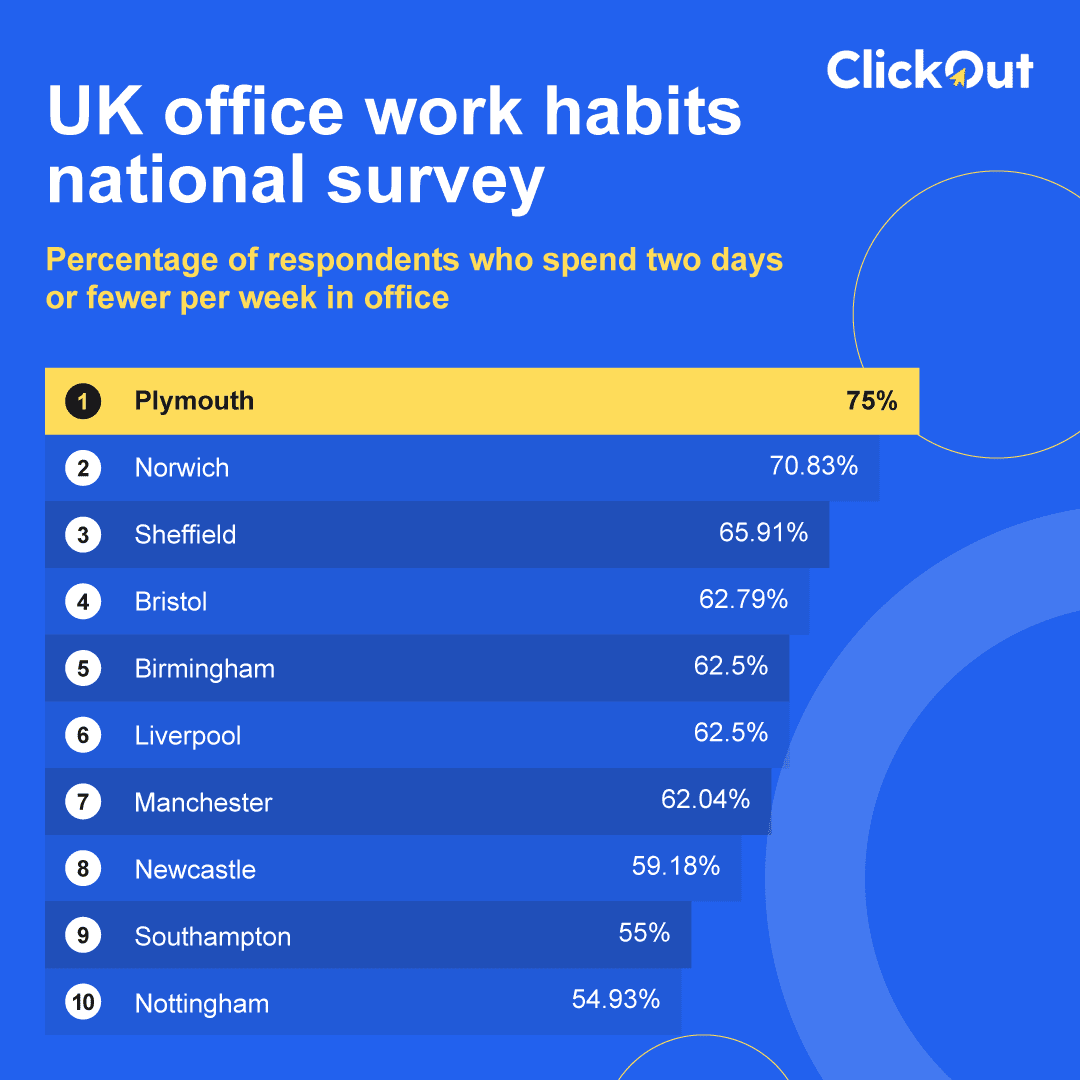
At the other end of the scale, Plymouth was the UK city with the highest proportion of respondents with two or fewer days per week in the office – 75% of office workers in the Devon city only commute a maximum of two times a week.
Norwich (70.83%), Sheffield (65.91%), Bristol (62.79%) and Birmingham (62.5%) were the other UK cities with the majority of the working week spent out of the office.
Neil Roarty, spokesperson for ClickOut Media, said: “Five years on from the coronavirus pandemic which prompted a major shift in working habits, a ClickOut Media nationwide poll has determined which UK city has the highest proportion of working days in the office.
“We surveyed more than 2,000 office staff across the UK, and found that Cardiff has the largest percentage of workers spending three or more days in the office – 42.11% in total.
“That figure put the Welsh capital ahead of Brighton, Edinburgh and Belfast as the four UK cities with the greatest proportion of office workers required to be at their desks.
“Conversely, Plymouth has the highest number of office workers who spend three days or more at home, with 75% of correspondents only in the office a maximum of two times a week.”
Gen Z shun office working in latest UK poll
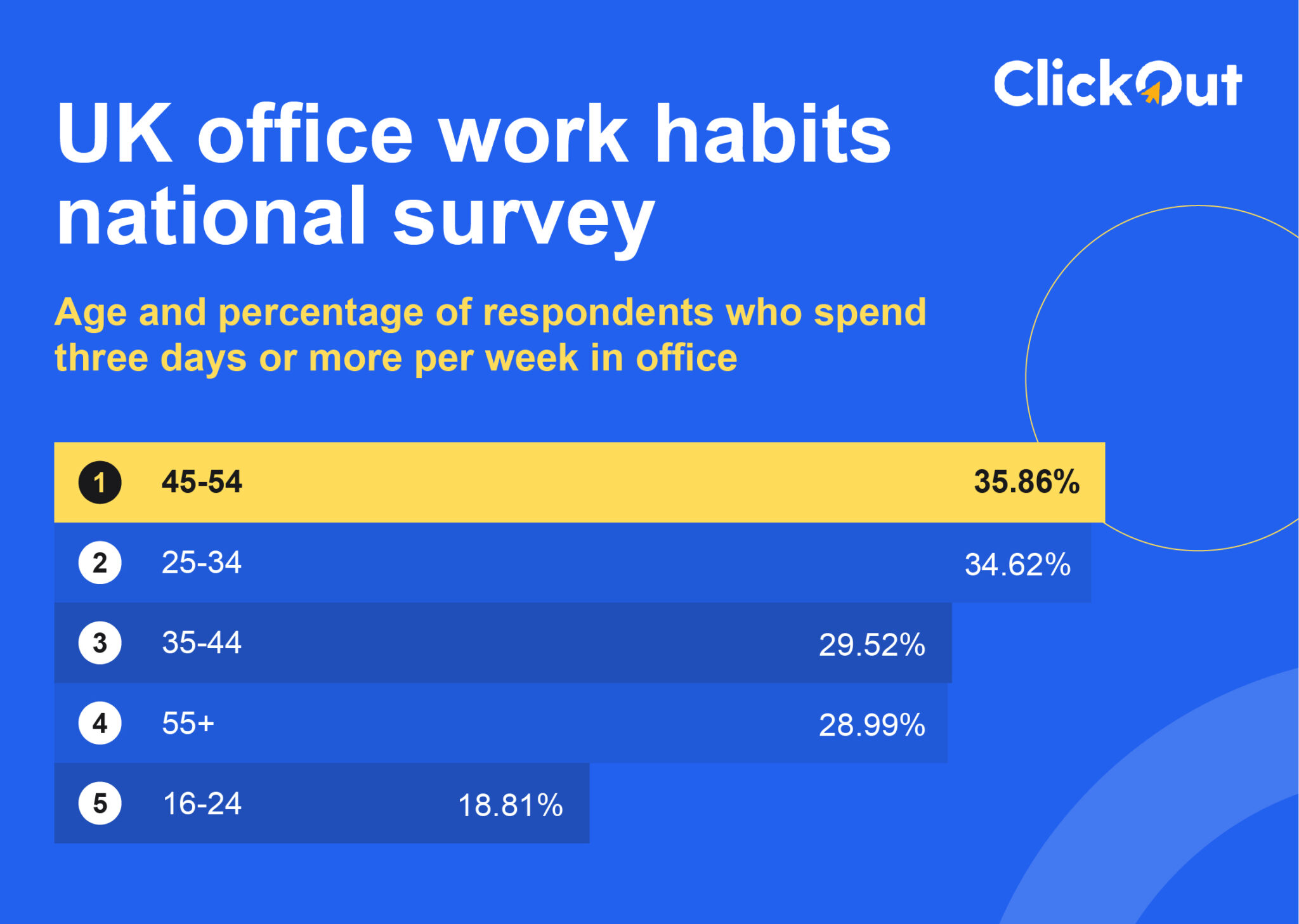
Latest statistics also show less than a fifth of the workforce aged between 16-24 spend three or more days per week in the office.
Only 18.81% of Gen Z staff spend the majority of their working week in the office. Those aged between 45-54 spend the most time in the office – 35.86% at their desks for three or more days a week – closely followed by 25-34-year-olds (34.62%).
The data also shows that 63.37% of those in the 16-24 bracket spend no more than two days per week in the office.
Neil Roarty added: “Gen Z staff have entered the workforce at a time when hybrid working was the norm, and they appear to be the main adopters of the work-from-home model.
“In our nationwide poll of more than 2,000 UK office workers, only 18.81% of staff aged between 16 and 24 say they spend three or more days in the office, with 63.37% reporting they work from the office two days or fewer each week.
“Correspondents aged 45-54 are closest to the traditional working habits, with 35.86% in the office three or more times a week, but even then, the majority (49.37%) have adopted hybrid schedules with more days spent at home than the office.”
Three or more days per week in office
1. Cardiff: 42.11%
2. Brighton: 40%
3. Edinburgh: 38.3%
4. Belfast: 36.67%
5. Southampton: 35%
6. Leeds: 34.92%
7. London: 33.86%
8. Nottingham: 32.39%
9. Glasgow: 30.3%
10. Liverpool: 29.17%
Two or fewer days per week in office
1. Plymouth: 75%
2. Norwich: 70.83%
3. Sheffield: 65.91%
4. Bristol: 62.79%
5. Birmingham: 62.5%
6. Liverpool: 62.5%
7. Manchester: 62.04%
8. Newcastle: 59.18%
9. Southampton: 55%
10. Nottingham: 54.93%
Three or more days per week in office
45-54: 35.86%
25-34: 34.62%
35-44: 29.52%
55+ : 28.99%
16-24: 18.81%
Two or fewer days per week in office
16-24: 63.37%
25-34: 59.62%
35-44: 58.78%
55+ : 58.7%
45-54: 49.37%
Help keep news FREE for our readers
Supporting your local community newspaper/online news outlet is crucial now more than ever. If you believe in independent journalism, then consider making a valuable contribution by making a one-time or monthly donation. We operate in rural areas where providing unbiased news can be challenging. Read More About Supporting The South Wales Chronicle